FISU Rowing 2026 Concludes: The World of University Rowing Came Together in London, Canada
From the first crews pushing away from the dock to the final medals being awarded, Fanshawe Lake became the centre of international university rowing for an unforgettable week in London, Ontario, Canada.
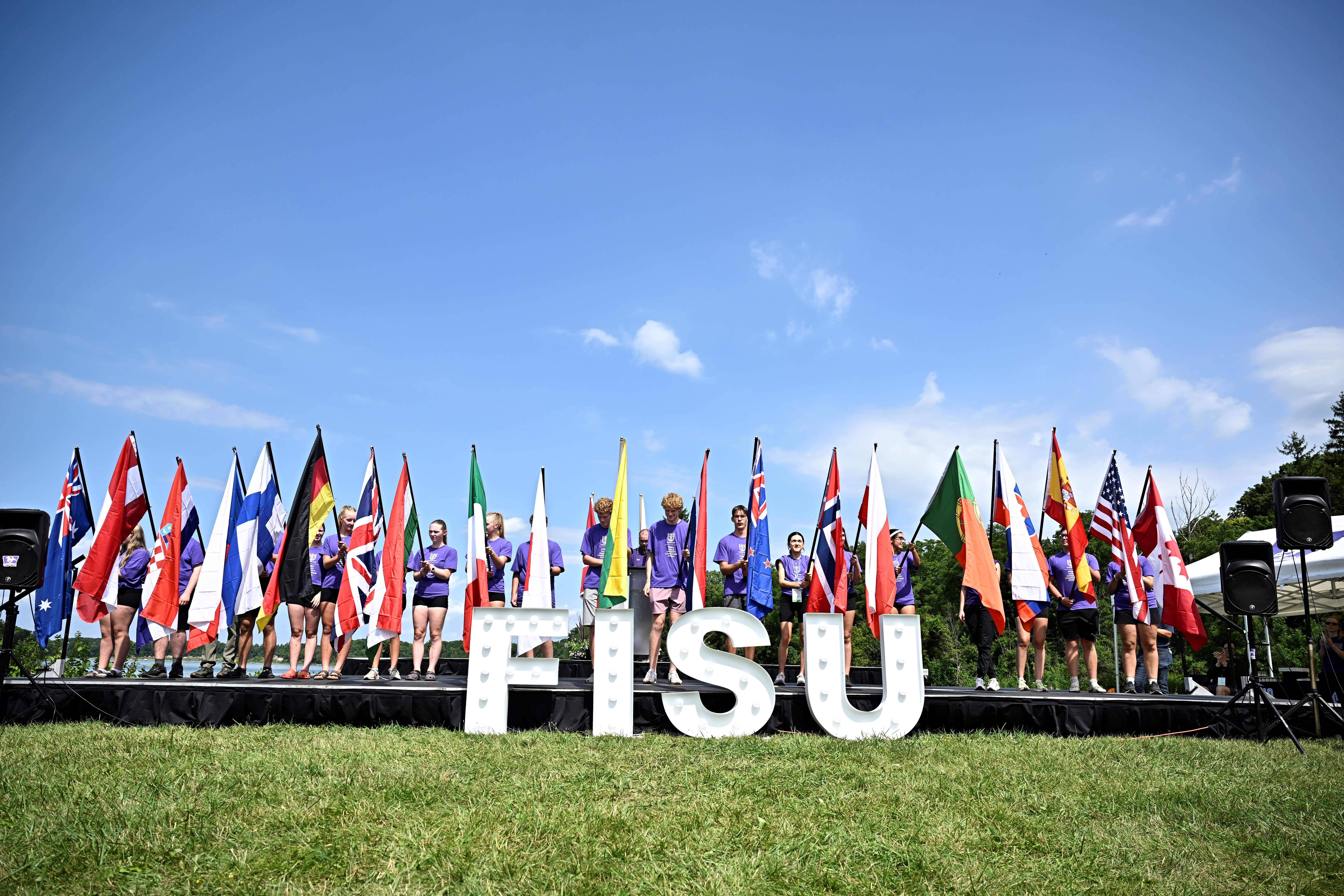
The 2026 FISU World University Championships Rowing brought student-athletes from around the world to Fanshawe Conservation Area from August 13–15, marking the first time the championship had been hosted in Canada. More than a competition, the week brought together athletes, coaches, officials, volunteers and supporters for a celebration of international university sport on and off the water.
Three Days on Fanshawe Lake
Training was open all week, but competition opened on Thursday, August 13, 2026 with crews getting their first opportunity to test themselves against an international field of competitors. Heats across the men’s and women’s single sculls, pairs, double sculls and fours set the championship in motion and began shaping the races that would follow.
By Friday, August 14 the stakes had climbed. Semifinals and preliminary races put Finals Day within reach as crews fought for position and a place in Saturday’s medal races.
Then came Saturday, August 15. Eleven championship finals. Eleven sets of medals. One last day on Fanshawe Lake.
Finals Day Delivers
The final morning began with Great Britain taking the first gold of the day in the Women’s Double Sculls, crossing in 7:07.340 ahead of Italy and Germany.
Italy answered immediately in the Men’s Eight, taking the world university title in 5:40.750, with Great Britain second and the Netherlands third.
The Netherlands followed with gold in the Women’s Pair.
As the finals continued, the margins became even tighter.
Germany captured the Mixed Quadruple Sculls title before Italy won one of the closest races of the championship in the Women’s Single Sculls. Italy crossed in 7:49.460, just 0.45 seconds ahead of the Netherlands, with Japan taking bronze.
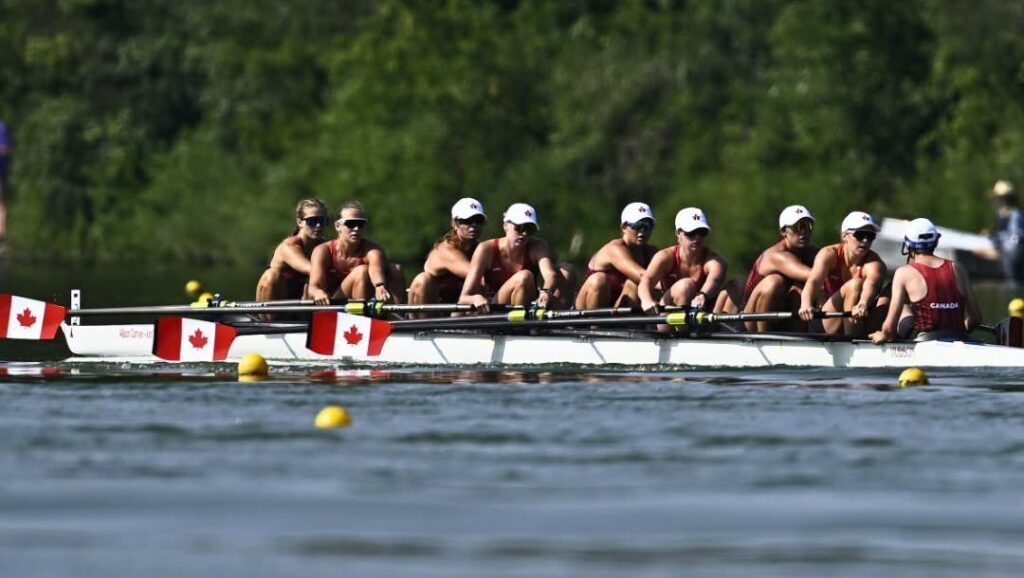
Italy added another gold in the Men’s Four, edging Great Britain by just 0.80 seconds, while Canada earned bronze.
The Men’s Single Sculls brought another finish decided by less than a second. Spain claimed gold in 7:00.730, only 0.61 seconds ahead of Germany, while Italy took bronze.
Germany followed with gold in the Women’s Four, finishing 0.93 seconds ahead of Great Britain. Italy then returned to the top of the podium in the Men’s Pair.
And then came a gold medal for the host nation. Canada won the Men’s Double Sculls final in 6:38.560, finishing ahead of the United States and Italy and adding a world university title to Canada’s historic week as host.
The final championship race belonged to the Netherlands, which won the Women’s Eight in 6:28.620. Great Britain finished just 0.90 seconds behind for silver, while Italy completed the podium with bronze.
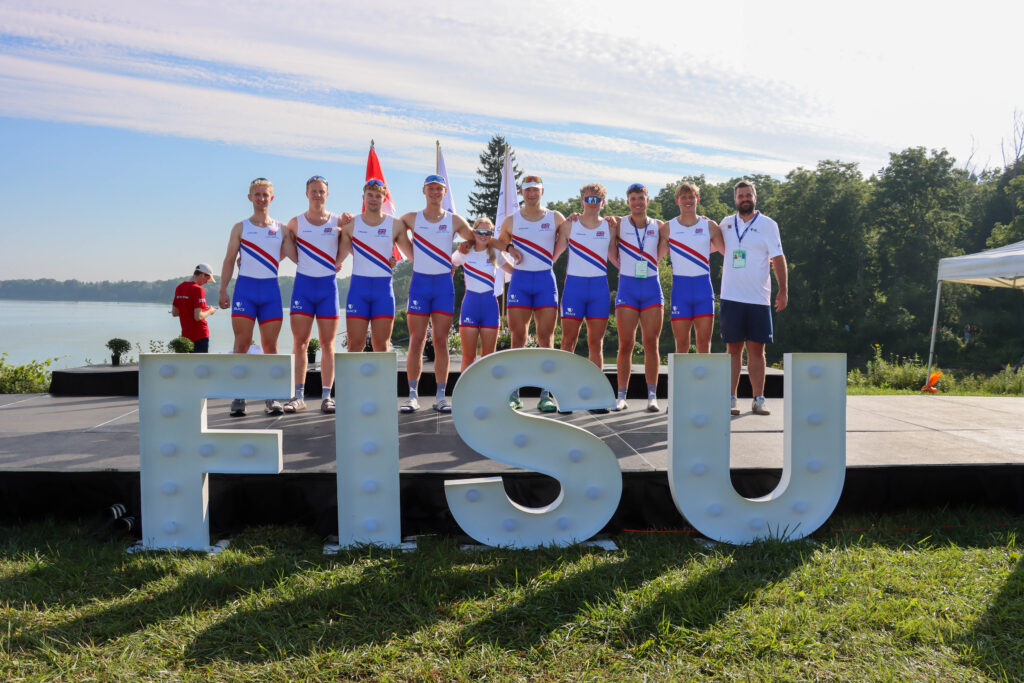
Across all 11 medal finals, Italy had a remarkable run, reaching the podium in every event and finishing the championship with four gold, two silver and five bronze medals. Great Britain also featured heavily throughout Finals Day, earning seven medals, including gold in the Women’s Double Sculls. Germany and the Netherlands each secured multiple world university titles, while Spain, Canada, Japan and the United States also reached the podium.
One Final Celebration
Once the last boat crossed the finish line, the focus shifted from the race course to the podium.
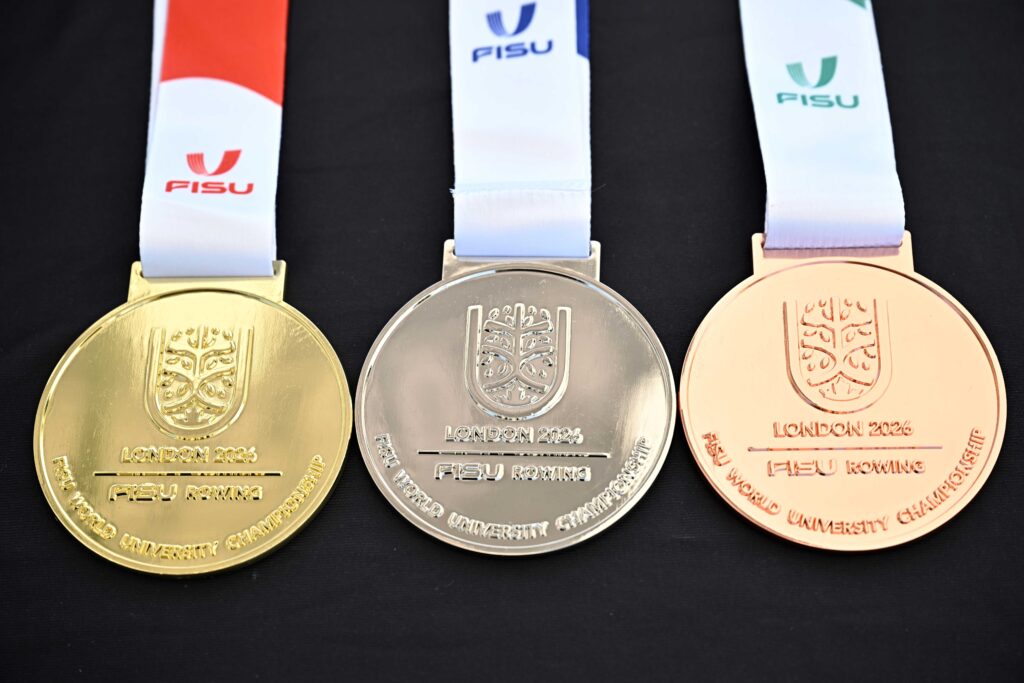
Athletes, coaches, officials, volunteers and supporters came together for the Medal and Closing Ceremony, where the performances of Finals Day were recognized and the 2026 FISU Rowing championships officially came to a close.
For the athletes, it was the final moment of an incredible week that included numerous social events, training opportunities, competitions and ceremonies. For London, it marked the conclusion of thousands of hours of preparation that started years ago, and marked an historic first opportunity to welcome the FISU World University Rowing Championships to North America – and Canada.
“It seemed surreal that something we’ve been planning for seven years finally came to fruition. We were so excited to see something that was once a dream become real. We’re so appreciative to the countless individuals and groups that made this a success.” Said Dan Bechard, 2026 FISU Championships Rowing Organizing Committee Chair, and Western University/Western Mustangs Head Coach, Men’s Rowing.
“We want to say a tremendous thank you to all of our incredible partners, who helped make this event a reality. The Government of Canada, The Government of Ontario, Tourism London, Western University, Rowing Canada Aviron, U SPORTS, the Upper Thames River Conservation Authority (Fanshawe Conservation Authority), Qiaodan, Hudson, BMW London, Concept 2 and Central Sanitation. And a huge thank you also to the tremendous staff and volunteers who worked tirelessly to make the event an incredible success.”
From close finishes and world university titles to new connections made between teams and individuals from across the globe, 2026 FISU Rowing left everyone with plenty of moments to remember. Want to relive those moments – photos and videos are available for free download through the Participants section of the FISU Rowing 2026 website. More photos will continue to be added throughout the week as they become available, watch @FISU.Rowing Instagram.
The racing may be finished, but the story of the 2026 FISU World University Championships Rowing will extend well beyond the final stroke.
Full race results, times and championship information are available through the Results section of this FISU Rowing 2026 website.
Version française
Les Championnats FISU d’aviron 2026 sont terminés: le monde de l’aviron universitaire s’est réuni à London, au Canada
Des premiers équipages quittant le quai jusqu’à la remise des dernières médailles, le lac Fanshawe est devenu le cœur de l’aviron universitaire international pendant une semaine inoubliable à London, en Ontario, au Canada.
Les Championnats du monde universitaires de la FISU d’aviron 2026 ont réuni des étudiants-athlètes venus du monde entier au Fanshawe Conservation Area du 13 au 15 août, marquant la toute première présentation des championnats au Canada. Bien plus qu’une compétition, cette semaine a rassemblé des athlètes, des entraîneurs, des officiels, des bénévoles et des partisans pour célébrer le sport universitaire international, sur l’eau comme à l’extérieur.
Trois jours de courses ont mené à une ultime journée de finales le samedi.
Trois jours sur le lac Fanshawe
L’entraînement s’est poursuivi toute la semaine, mais la compétition a officiellement commencé le jeudi 13 août 2026, alors que les équipages ont eu leur première occasion de se mesurer à un peloton international. Les séries des épreuves de skiff masculin et féminin, de deux de couple, de deux de pointe et de quatre de pointe ont lancé les championnats et commencé à tracer la voie vers les courses à venir.
Le vendredi 14 août, les enjeux étaient encore plus élevés. Les demi-finales et les courses préliminaires ont permis aux équipages de se rapprocher de la journée des finales, alors que chacun se battait pour obtenir une place dans les courses aux médailles du samedi.
Puis est arrivé le samedi 15 août.
Onze finales de championnat. Onze séries de médailles. Une dernière journée sur le lac Fanshawe.
Une journée de finales à la hauteur des attentes
La dernière matinée de compétition a commencé avec la Grande-Bretagne qui a remporté la première médaille d’or de la journée au deux de couple féminin, avec un temps de 7:07.340, devant l’Italie et l’Allemagne.
L’Italie a immédiatement répliqué au huit masculin, remportant le titre universitaire mondial en 5:40.750. La Grande-Bretagne a pris l’argent et les Pays-Bas le bronze.
Les Pays-Bas ont ensuite décroché l’or au deux de pointe féminin.
Au fil des finales, les écarts se sont resserrés davantage.
L’Allemagne a remporté le titre au quatre de couple mixte, avant que l’Italie ne s’impose dans l’une des courses les plus serrées des championnats, au skiff féminin. L’Italie a franchi la ligne en 7:49.460, seulement 0,45 seconde devant les Pays-Bas, tandis que le Japon a obtenu le bronze.
L’Italie a ajouté une autre médaille d’or au quatre de pointe masculin, devançant la Grande-Bretagne de seulement 0,80 seconde. Le Canada a remporté le bronze.
Le skiff masculin a donné lieu à une autre arrivée décidée à moins d’une seconde. L’Espagne a remporté l’or en 7:00.730, seulement 0,61 seconde devant l’Allemagne, tandis que l’Italie a obtenu le bronze.
L’Allemagne a ensuite remporté l’or au quatre de pointe féminin, terminant 0,93 seconde devant la Grande-Bretagne. L’Italie est ensuite revenue au sommet du podium au deux de pointe masculin.
Puis est arrivée une médaille d’or pour le pays hôte.
Le Canada a remporté la finale du deux de couple masculin en 6:38.560, devant les États-Unis et l’Italie, ajoutant ainsi un titre universitaire mondial à la semaine historique du Canada à titre de pays hôte.
La dernière course des championnats a été remportée par les Pays-Bas, qui ont décroché l’or au huit féminin en 6:28.620. La Grande-Bretagne a terminé à seulement 0,90 seconde derrière pour obtenir l’argent, tandis que l’Italie a complété le podium avec le bronze.
Dans les 11 finales pour les médailles, l’Italie a connu une performance remarquable, montant sur le podium dans chacune des épreuves et terminant les championnats avec quatre médailles d’or, deux d’argent et cinq de bronze. La Grande-Bretagne a également été très présente tout au long de la journée des finales, remportant sept médailles, dont l’or au deux de couple féminin. L’Allemagne et les Pays-Bas ont chacun remporté plusieurs titres universitaires mondiaux, tandis que l’Espagne, le Canada, le Japon et les États-Unis ont également atteint le podium.
Une dernière célébration
Une fois le dernier bateau arrivé, l’attention s’est déplacée du parcours de course vers le podium.
Les athlètes, les entraîneurs, les officiels, les bénévoles et les partisans se sont réunis pour la cérémonie des médailles et de clôture, où les performances de la journée des finales ont été soulignées et où les Championnats FISU d’aviron 2026 ont officiellement pris fin.
Pour les athlètes, il s’agissait du dernier moment d’une semaine exceptionnelle qui comprenait de nombreuses activités sociales, des occasions d’entraînement, des compétitions et des cérémonies. Pour London, cette journée marquait l’aboutissement de milliers d’heures de préparation amorcées il y a plusieurs années, ainsi que la conclusion d’une occasion historique d’accueillir pour la première fois les Championnats du monde universitaires de la FISU d’aviron en Amérique du Nord — et au Canada.
« Il semblait irréel de voir enfin se concrétiser quelque chose que nous préparions depuis sept ans. Nous étions tellement heureux de voir un rêve qui semblait autrefois si lointain devenir réalité. Nous sommes extrêmement reconnaissants envers les innombrables personnes et groupes qui ont contribué à faire de cet événement une réussite », a déclaré Dan Bechard, président du comité organisateur des Championnats FISU d’aviron 2026 et entraîneur-chef de l’aviron masculin de l’Université Western et des Mustangs de Western.
« Nous tenons à remercier chaleureusement tous nos partenaires extraordinaires qui ont contribué à rendre cet événement possible : le gouvernement du Canada, le gouvernement de l’Ontario, Tourism London, l’Université Western, Rowing Canada Aviron, U SPORTS, l’Upper Thames River Conservation Authority (Fanshawe Conservation Authority), Qiaodan, Hudson, BMW London, Concept2 et Central Sanitation. Nous souhaitons également adresser un immense merci à l’exceptionnelle équipe d’employés et de bénévoles qui ont travaillé sans relâche pour faire de cet événement une immense réussite. »
Des arrivées serrées aux titres universitaires mondiaux, en passant par les nouvelles relations créées entre des équipes et des personnes venues des quatre coins du monde, les Championnats FISU d’aviron 2026 auront laissé à chacun de nombreux souvenirs.
Vous souhaitez revivre ces moments? Les photos sont disponibles gratuitement en téléchargement dans la section Participants du site Web des Championnats FISU d’aviron 2026. D’autres photos continueront d’être ajoutées au cours de la semaine, au fur et à mesure qu’elles seront disponibles. Suivez @FISU.Rowing sur Instagram.
Les courses sont peut-être terminées, mais l’histoire des Championnats du monde universitaires de la FISU d’aviron 2026 se poursuivra bien au-delà du dernier coup de rame.
Les résultats complets, les temps et les renseignements sur les championnats sont disponibles dans la section Résultats du site Web des Championnats FISU d’aviron 2026.
 7 Aug
7 Aug